Physiotherapy Services
Techniques and approach
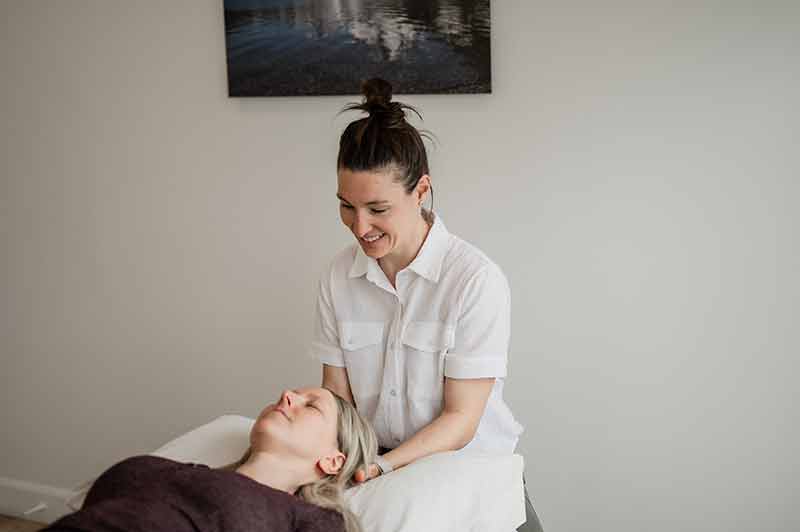
- Manual therapy
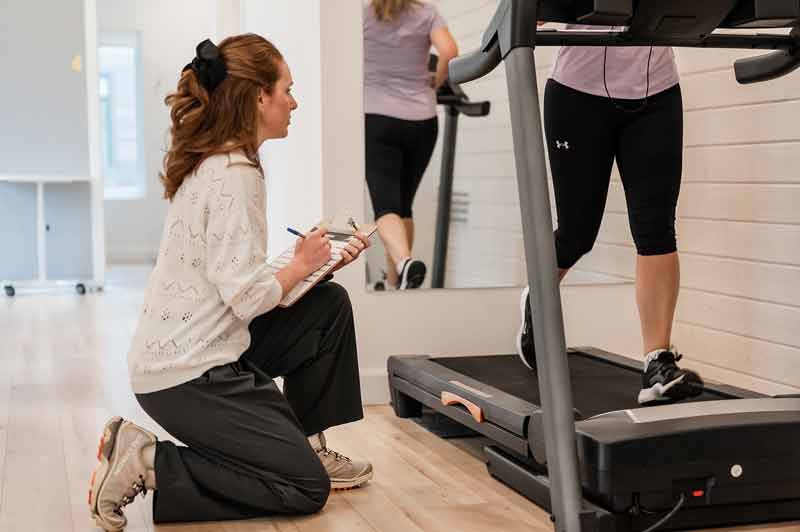
- Gait analysis
- Postoperative rehabilitation
- Postural evaluation
- Vestibular rehabilitation: benign paroxysmal positional vertigo (BPPV)
- Myofascial release
- Motor control
- Cranial approach (e.g., headaches)
- Athletic and neuroproprioceptive taping
- Dry needling in physiotherapy
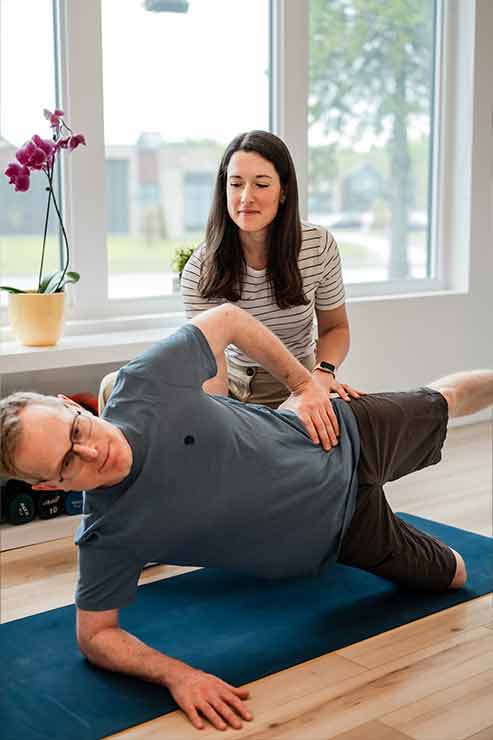
- Yoga therapy
Manual therapy
Manual therapy is a postgraduate continuing education program at the Association Québécoise de Physiothérapie Avancée (AQPMA). The program teaches a better understanding of patient concerns and how to master more advanced treatment techniques.
Manual therapy helps restore mobility, movement quality and motor control of the joints. Passive mobilization, manipulation, myofascial and muscle relaxation, as well as muscle control exercises are some of the techniques used in manual therapy.
Gait analysis
A physiotherapist trained by The Running Clinic analyzes your running technique on a treadmill to help prevent and/or treat injuries. Based on each runner’s needs and circumstances, several aspects are assessed, including biomechanics, foot strike, cadence, ground impact force, footwear, running program, terrain and progression. A personalized training program is then developed to help you progress safely.
Pelvic Floor Rehabilitation
At our clinic, we offer specialized women’s pelvic floor rehabilitation services to treat urinary incontinence, including care during pregnancy and after childbirth.
Through a personalized assessment, our physiotherapist, Catherine Paquin, who is trained in pelvic health, identifies your needs and develops a tailored treatment plan. This may include manual techniques, targeted exercises and practical advice to help manage urinary leakage in everyday life.
Our gentle, reassuring and professional approach is designed to create a trusting environment while helping you manage urinary leakage and improve your quality of life.
Urinary concerns treated:
- Urinary leakage
- Leakage during physical activity
- Pregnancy-related concerns
- Postpartum concerns
- Sudden urges to urinate
- Frequent or incomplete urination

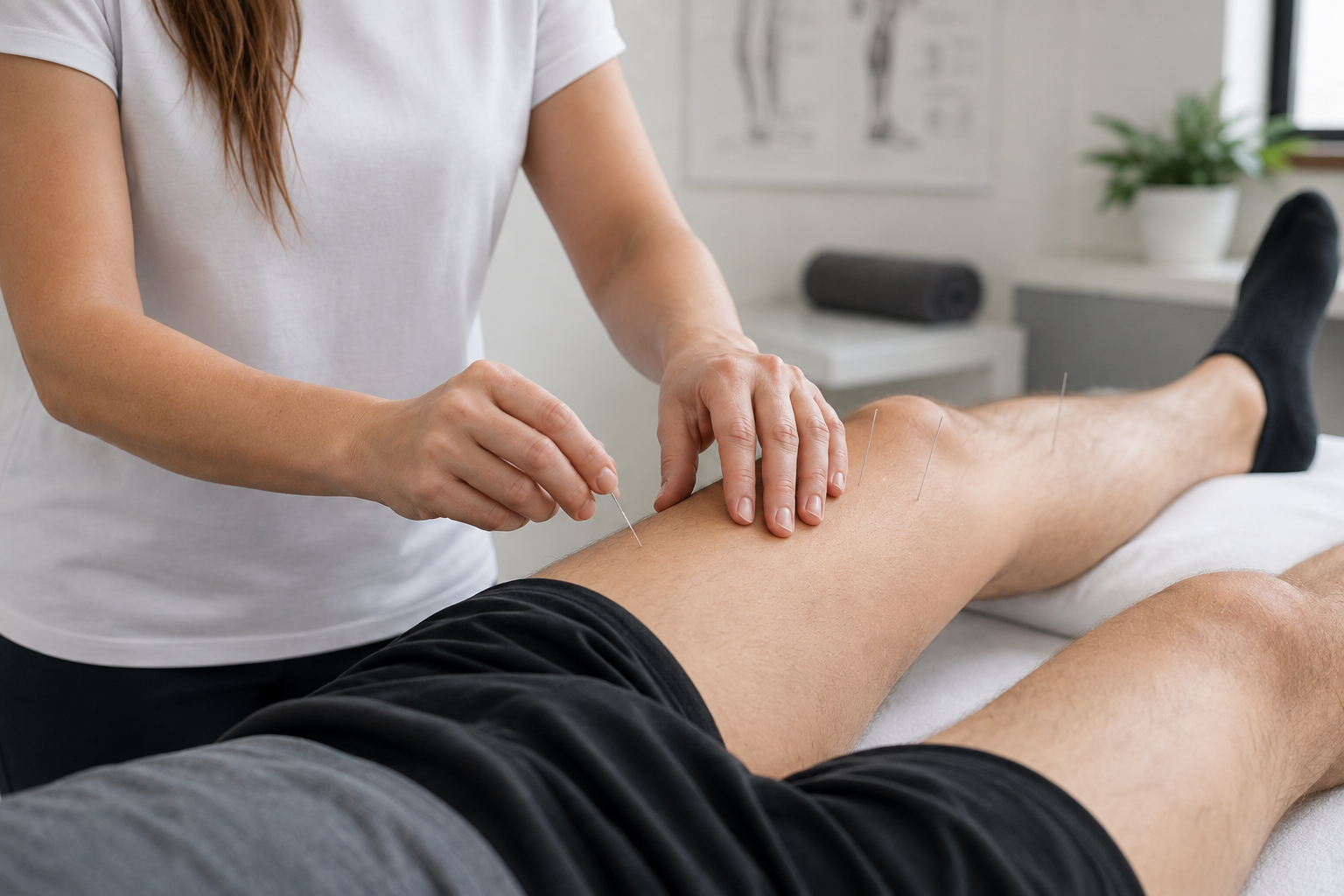
Dry Needling in Physiotherapy
Physiotherapy dry needling, also known simply as “dry needling,” is a technique used by some of our physiotherapists to treat muscle pain and areas of tension known as trigger points. Using thin, sterile needles, the physiotherapist precisely targets the muscles involved to relieve pain, reduce tension and improve function.
Dry needling may be used to treat various conditions, including persistent muscle pain, neck and back pain, tendinopathies, headaches caused by muscle tension and various sports injuries.
This technique is generally incorporated into a comprehensive treatment plan that also includes exercises, education and manual therapy to optimize results.
Who is physiotherapy for?
Physiotherapists work with athletes, manual labourers, seniors, children, students, as well as more serious cases such as polytrauma victims, car accident victims, paralysis and heart patients.
Physiotherapists also treat patients with less serious but just as uncomfortable conditions such as tendonitis, back and neck pain, sprains, fractures, sciatica nerve pain, etc.

The consultation with a physiotherapist
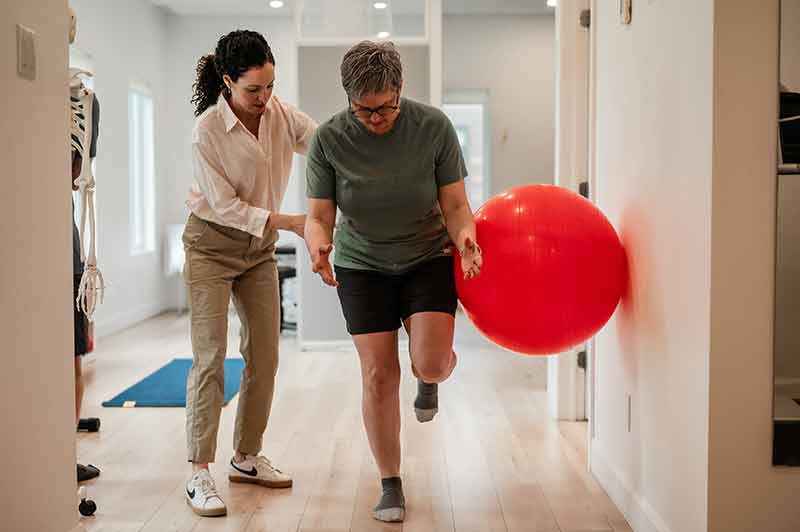
During a consultation, the physiotherapist reviews the history of the injury with the patient and then conducts a comprehensive assessment of their condition. The physical assessment includes tests to gather information about muscle strength, joint mobility, nerve and ligament integrity, the impact on activities of daily living, gait, posture and balance. This information allows the physiotherapist to analyze the nature of the problem and provide a clinical impression. A personalized treatment plan is then developed to address the patient’s needs.
What does the treatment plan consist of?
FAQ
display none
Your content goes here. Edit or remove this text inline or in the module Content settings. You can also style every aspect of this content in the module Design settings and even apply custom CSS to this text in the module Advanced settings.
Do I need a medical referral to see a physiotherapist?
No. You can consult a physiotherapist directly without a medical referral or having to see a doctor beforehand.
How long does an initial physiotherapy assessment take?
How long does a physiotherapy treatment session last?
How many treatment sessions will I need?
Are physiotherapy treatments covered by the RAMQ?
How long does an osteopathy consultation last?
A collaboration that benefits you!
Finally, the physiotherapist works closely with other healthcare professionals—including physicians, osteopaths, acupuncturists, massage therapists, occupational therapists, nurses, psychologists and nutritionists—to optimize the patient’s rehabilitation and quality of life.